S.Maria dei Battuti Church

Sacred building, simple and essential, started at the beginning of XIV century for the Flagellants “Scuola” or Confraternity, whose first record in Belluno is dated back to 1260 and which was formally created with a statute and a register of the brethren’s names in 1310. Two inscriptions written in gothic characters remember the rising of…

Victory Bridge

Built between 1923 and 1926 by the venetian Eugenio Miozzi (1889-1979) as a substitution of the older bridge, built a little more north, whose first arch is the only surviving, built in 1837-41 by Antonio Zilli and collapsed in 1882 due to a big violent flood of the Piave river. It was wpened on May…

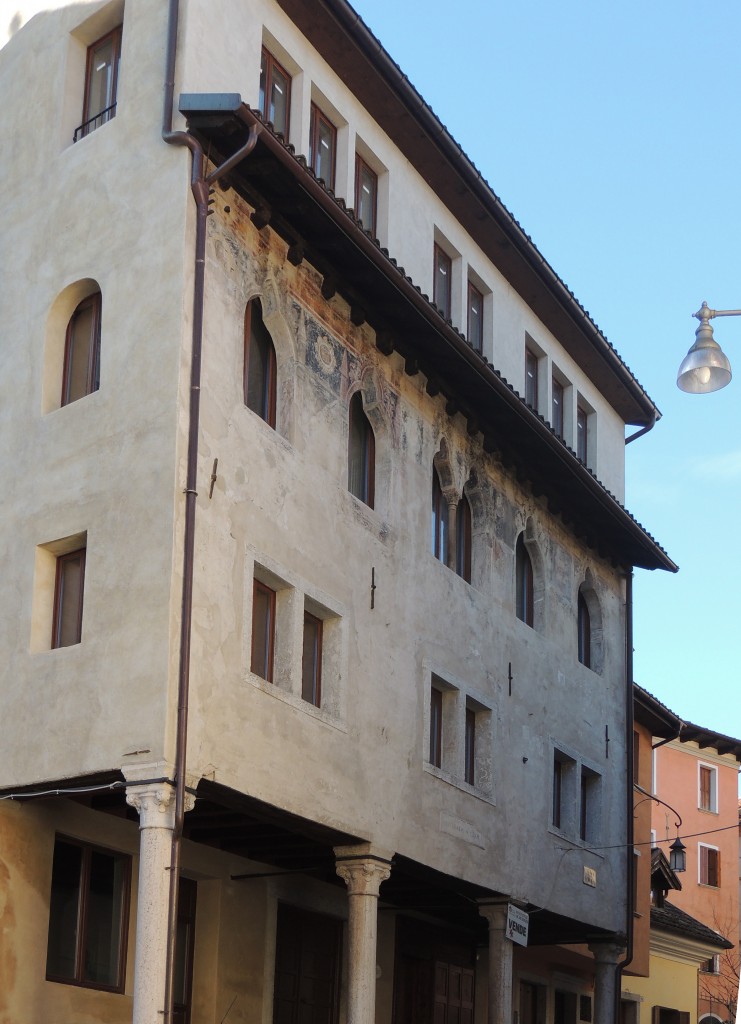
Casa Secco Palace

Private building dating to the XV century, partly rebuilt on several occasions, following higher noble models of the upper city. The façade still shows large parts of the original fresco decorations painted at the beginning of XVI century. The author is unknown and shows some artistic weaknesses, in the composition and in the rendering of…

S.Nicolò Church

Spiritual center of the Borgo Piave community, dedicated to St. Nicholas patron of the “zattieri” (the timber rafts punters) who transported wood and goods along the river from Cadore to Venice. A first building was erected in 1361, then rebuilt in 1547 as recorded by an inscription engraved on the architrave of the church, then…

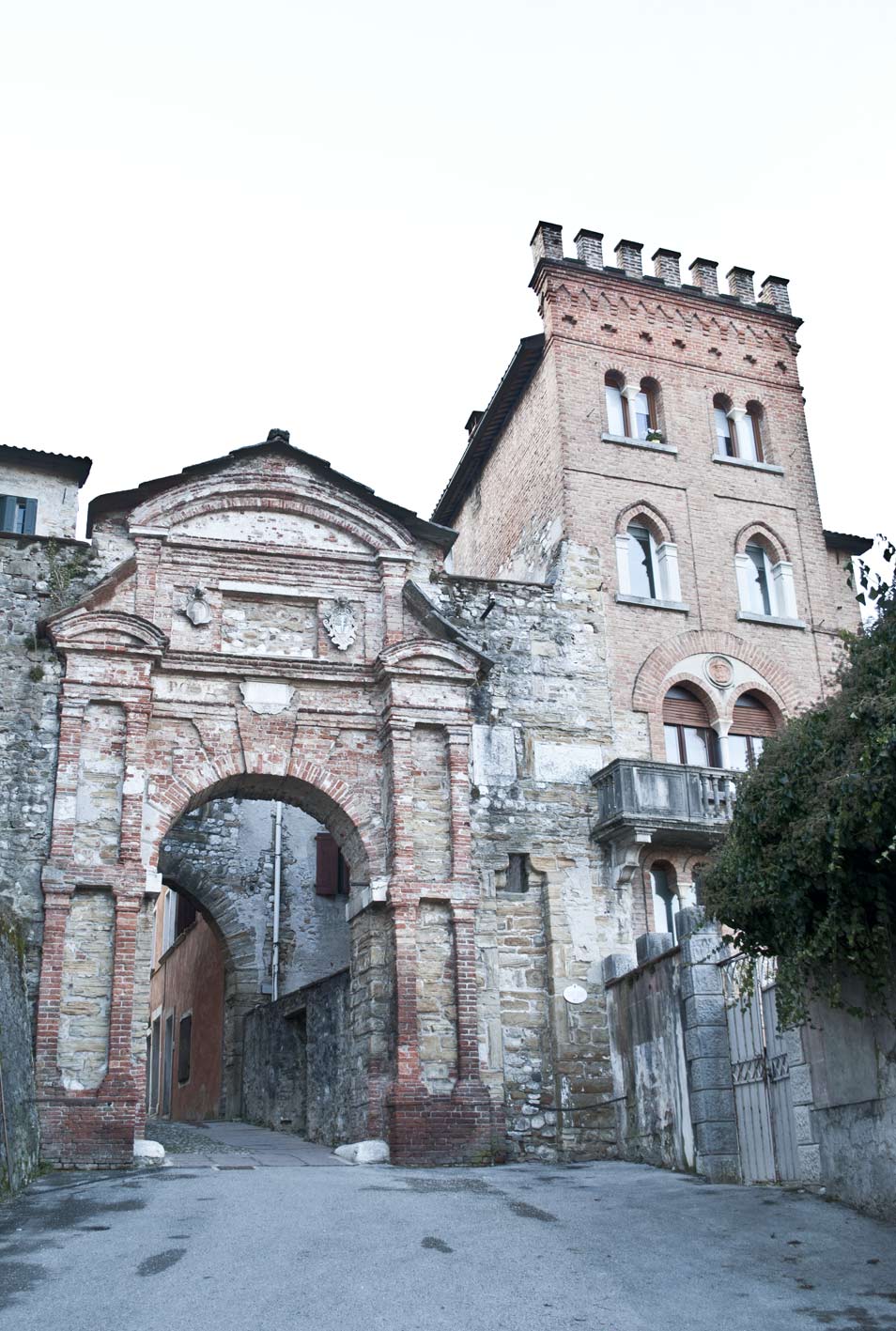
Rugo Gate

The historic southern gate to the city, from the old river port of Borgo Piave. At the beginning of XIX century have been heavily modified the side fortresses which defended the gate, the two little towers that flanked it (le “Torricelle”) and the large tower that existed on the left. Of the original structure, entered…

Nossadani Palace

One of the last private buildings of the XV century city, still showing a little part of the frescoes that used to cover the façade, according to a decorative urban pattern tipical of the venetian mainland, from Feltre to Conegliano, Treviso and even Trento. Traditionally is known to have been the house of the noble…

Bolzanio Coraulo Palace

Today’s building is the result of a XVIII century intervention that assembled the XV and XVI century houses of the Coraulo family (there is still the coat of arms over the entrance portal) and Bolzanio family, whence came the two greatest bellunese Renaissance scholars, the Franciscan friar Urbano Bolzanio (1442-1524), who in 1497 published in…

Reviviscar Palace

On a tower-house of the XIV century that traditionally belonged to Gaia da Camino (same name, but not the lady quoted by Dante in his “Divina Commedia”, Purgatory XVI, 140), the Persico family built its palace during XV century and enriched it between 1496 and 1506 with a stone façade decorated with sculptured mythological figures…

Alpago Palace

A building probably dating from the XV century, then heavily altered, with elements from the XVI century and later structural interventions. Particularly interesting the stone bust fixed high on the north-west façade, facing Reviviscar palace, dated 1566 and portraying Andrea Alpago (who died in 1522) dressed in middle eastern style. A bellunese scholar, a traveler…

Doglioni Dalmas Palace

The palace was built in the mid XVIII century, on an empty space belonging to the Alpago family that was kept clear because of its possible military use behind the city wall. The owner, Andrea Alpago, wanted it to be completed by the architect Valentino Alpago-Novello for the wedding of his daughter Marianna with Matteo…